Risk factors
The Risk factors screen records lifestyle habits, substance use metrics, and familial disease predispositions.
What it does
This screen tracks modifiable and non-modifiable health risk factors: - Lifestyle factors: Tobacco smoking status (pack-year history, cessation date), alcohol consumption (standard drinks per week, AUDIT-C screening scores), physical activity levels, and dietary habits. - Family history: Familial medical conditions recorded by relative relationship, condition onset age, and hereditary risk flags.
Clinicians can record new risk factors, update lifestyle metrics as habits change, and track cardiovascular and metabolic risk indicators.
When to use it
Use this screen when taking a comprehensive new patient medical history, during lifestyle counselling consultations, or when assessing eligibility for chronic disease care plans.
Step by step
- Select Risk factors in the chart sections menu to inspect lifestyle metrics and family history.
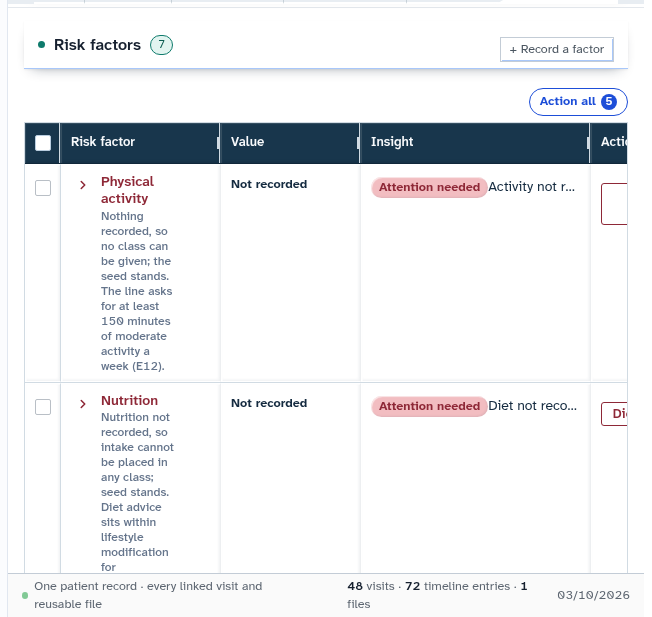
- Select Record a factor to enter or update a lifestyle habit or family medical history entry.
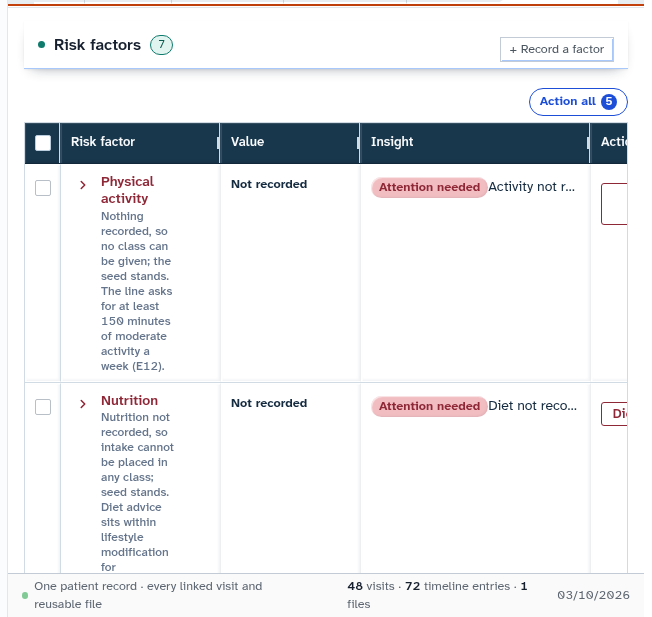
Also on this screen
- Risk factors section: Comprehensive overview table listing recorded lifestyle habits and hereditary risk markers.
- Record a factor: Interactive modal dialog for recording specific lifestyle factors or family medical history.
- Lifestyle section: Dedicated panel tracking smoking history, alcohol consumption, exercise, and AUDIT-C scores.
- Family history section: Structured register documenting familial medical conditions and degree of consanguinity.
What Agent D can do
- Agent D incorporates lifestyle risk factors into cardiovascular and metabolic risk calculations.
- Agent D evaluates family history to flag hereditary screening opportunities (such as early bowel or breast cancer screening).
- Agent D drafts risk factor updates when lifestyle changes are discussed in consultation notes.
Safety (what needs your Confirm)
- Risk factors directly influence clinical screening recommendations and risk calculator outputs.
- Any recorded risk factor is saved to the medical record only after your explicit confirmation.
Common questions
How is the AUDIT-C score calculated?
The AUDIT-C score is automatically calculated based on the three standard questions: frequency of drinking, typical quantity consumed, and frequency of heavy drinking.
How do I record that a patient quit smoking?
Select the smoking entry, change the status to "Ex-smoker", enter the cessation date (DD/MM/YYYY), and record past pack-year history.
Can I record family history for maternal and paternal relatives separately?
Yes. The family history form captures the specific relationship (e.g. Mother, Father, Maternal Grandmother) and age of onset.
Related
Last reviewed: 03/10/2026.