Differential
The Differential drawer provides an evidence-based list of diagnostic possibilities ranked by probability, complete with supporting and refuting features.
What it does
The Differential panel brings together symptoms, history, examination findings, and patient demographics to produce a ranked list of potential diagnoses. Each entry displays a clinical likelihood percentage, supporting clinical features present in the chart, and specific red flags that must be excluded.
When to use it
Open the Differential drawer when evaluating undifferentiated complaints, atypical presentations, or challenging multi-system conditions.
Step by step
- Select Differential from the right tool rail to inspect the ranked diagnostic possibilities.
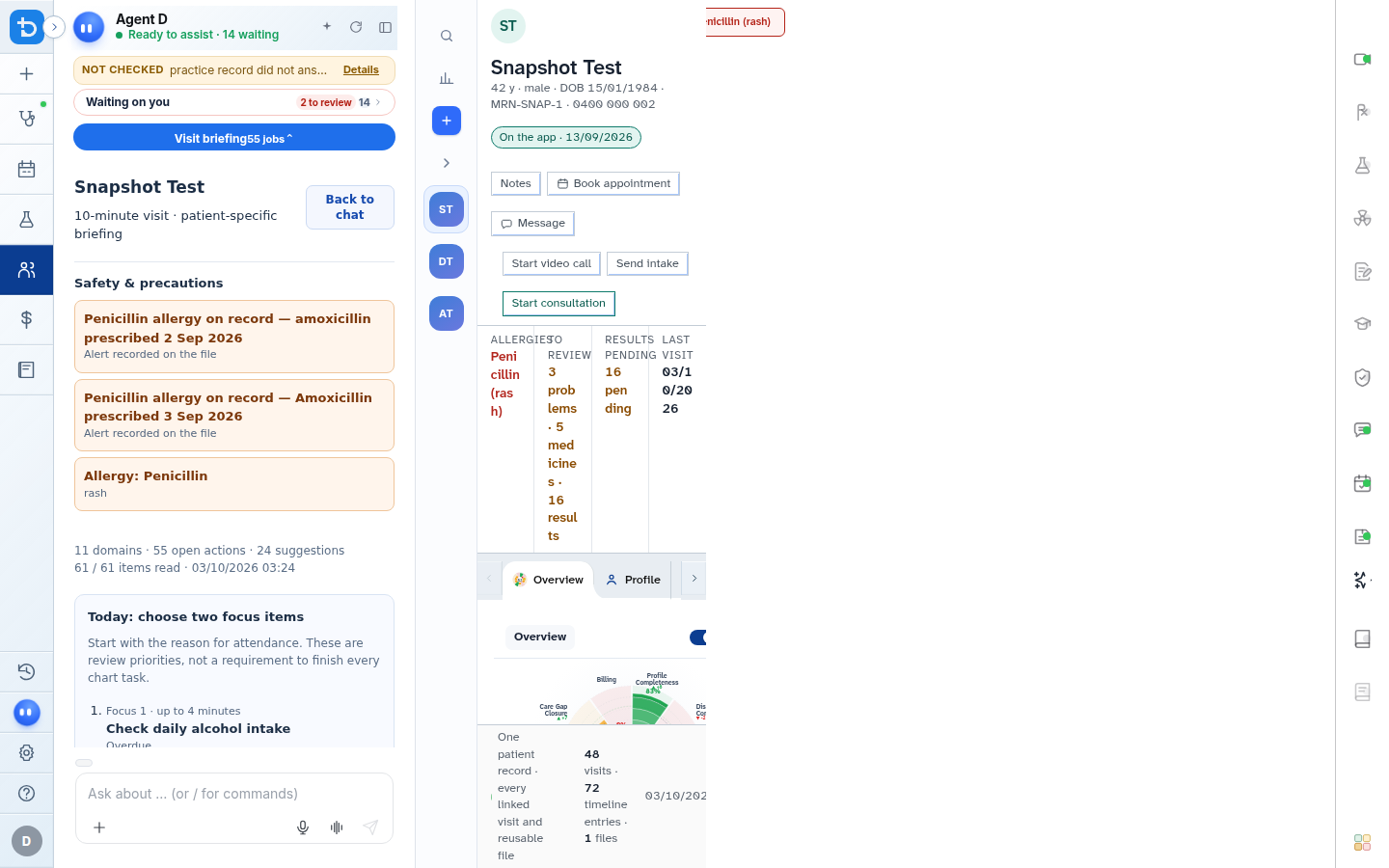
Also on this screen
- Ranked diagnosis list: Clinical conditions sorted by calculated likelihood based on consultation evidence.
- Percentage probability badges: Estimated likelihood scores indicating primary versus secondary considerations.
- Supporting and refuting features: Expandable bullet points showing which positive findings support each diagnosis and which findings make it less likely.
- Resize differential: Drag the panel edge to widen or narrow the list; your preferred width is remembered.
- Agent D reading indicator: Informative header notice showing which patient chart factors contributed to the differential.
- Close differential: Closes the drawer and returns focus to the consultation note.
What Agent D can do
- Agent D recalculates diagnostic probabilities dynamically as new examination signs or pathology results are entered.
- Agent D highlights dangerous or must-not-miss conditions even when statistical likelihood is low.
- Agent D links each differential diagnosis to relevant investigation panels and treatment plans.
Safety (what needs your Confirm)
- The differential diagnosis is a decision-support aid. Clinical diagnostic responsibility rests entirely with the treating medical practitioner.
- Investigating or treating a diagnosis requires the doctor to initiate specific orders and prescriptions.
Common questions
How are the percentage probabilities calculated?
Probabilities are derived from clinical literature likelihood ratios matched against the patient age, sex, risk factors, and recorded findings.
Why is a rare condition listed near the top of the differential?
Certain life-threatening conditions (such as pulmonary embolism or aortic dissection) are prioritized as must-not-miss red flags regardless of statistical rarity.
Can I copy the differential into my consultation note?
Yes. Click the Copy to note shortcut to paste the ranked differential directly into your assessment section.
Related
Last reviewed: 03/10/2026.